

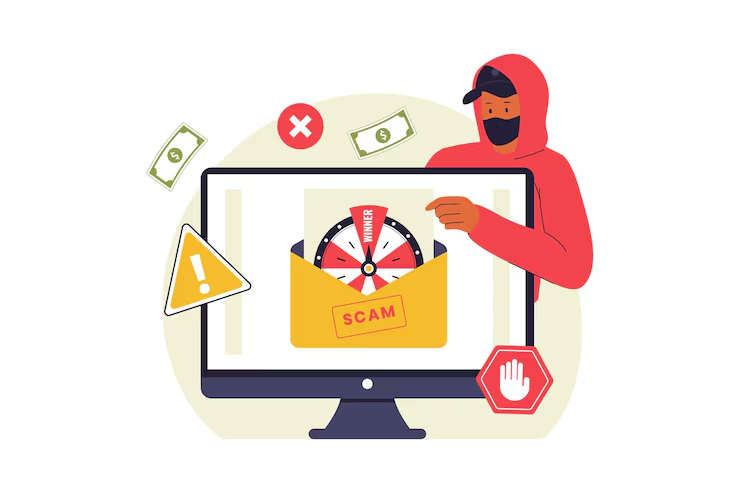
Online gambling has grown rapidly worldwide, but in the Middle East it remains a highly sensitive and tightly regulated subject. Despite strict laws in many countries, underground platforms continue to attract users through offshore websites, fake apps, and social media promotions. This environment has also given rise to a significant increase in fraud cases, ranging from identity theft to payment scams and rigged gaming systems.
In this article, we explore how online gambling fraud operates in the region, the most common scam techniques, and why users searching for platforms like kuwait online casinos are often targeted.
The Legal Landscape of Online Gambling in the Middle East
In countries such as Kuwait, online gambling is strictly prohibited under national law. Similar restrictions exist across much of the region, including in Saudi Arabia and Iran, while the United Arab Emirates enforces heavy penalties against illegal gambling operations.
Because of these restrictions, legitimate licensed online casinos do not operate within most Middle Eastern jurisdictions. This legal vacuum has created a space where fraudulent operators exploit users looking for entertainment options.
Why Fraud Cases Are Rising
The rise in online gambling fraud in the Middle East is driven by several key factors:
- High demand for online entertainment despite legal restrictions
- Lack of licensed platforms in the region
- Easy access to offshore gambling websites via VPNs
- Aggressive marketing on social media and messaging apps
- Limited awareness of digital fraud risks among new users
Many users searching for terms like kuwait online casinos are redirected to unsafe platforms that appear legitimate but are designed solely to extract money or personal data.
Common Types of Online Gambling Fraud
1. Fake Casino Websites
Fraudsters create professional-looking casino websites that mimic real international platforms. These sites often allow deposits but block withdrawals or disappear entirely after collecting funds.
2. Rigged Games and Algorithms
Some illegal platforms manipulate game outcomes, ensuring players lose consistently. Unlike regulated casinos, these systems are not audited or fair.
3. Payment Scams
Users are asked to deposit money via crypto wallets or untraceable payment methods. Once transferred, funds are rarely recoverable.
4. Identity Theft Schemes
Certain fraudulent sites request passports, ID cards, or banking details under the pretense of verification. These details are later sold or misused.
5. Affiliate and Social Media Traps
Influencers or anonymous accounts promote “winning strategies” or “exclusive casino links,” which often lead to scam platforms.
Real-World Impact on Users
Victims of online gambling fraud in the Middle East often face:
- Financial losses with no legal recourse
- Exposure of personal identity documents
- Bank account compromise
- Psychological stress due to addiction and deception
- Difficulty reporting cross-border crimes
Since most fraudulent operators are based offshore, law enforcement agencies struggle to trace or shut them down effectively.
Why “Kuwait Online Casinos” Searches Are Risky
Searches for kuwait online casinos are especially vulnerable to fraud targeting because:
- There are no legally licensed online casinos in Kuwait
- Search results often include offshore scam websites
- Fake apps mimic legitimate gaming platforms
- Users may be redirected to phishing pages requesting deposits
This makes awareness and digital caution extremely important for users in the region.
Government and Cybersecurity Responses
Governments across the Middle East are increasing efforts to combat online fraud by:
- Blocking illegal gambling domains
- Monitoring suspicious financial transactions
- Strengthening cybercrime laws
- Running public awareness campaigns
- Collaborating with international cybersecurity agencies
However, enforcement remains challenging due to the borderless nature of online platforms.
How Users Can Protect Themselves
To reduce the risk of falling victim to gambling fraud:
- Avoid unlicensed or unknown gambling websites
- Do not trust “guaranteed win” promotions
- Never share personal ID or banking details online
- Be cautious of social media casino advertisements
- Research platform legitimacy before any financial interaction
Conclusion
Online gambling fraud in the Middle East continues to evolve alongside technology, exploiting legal restrictions and user curiosity. Countries like Kuwait illustrate how strict regulations do not eliminate demand but instead shift activity into unsafe digital spaces.
As interest in terms like kuwait online casinos grows, so does the importance of awareness and digital caution. Understanding the risks is the first step in avoiding financial loss and identity theft in an increasingly complex online environment.
